What "desi food" actually means
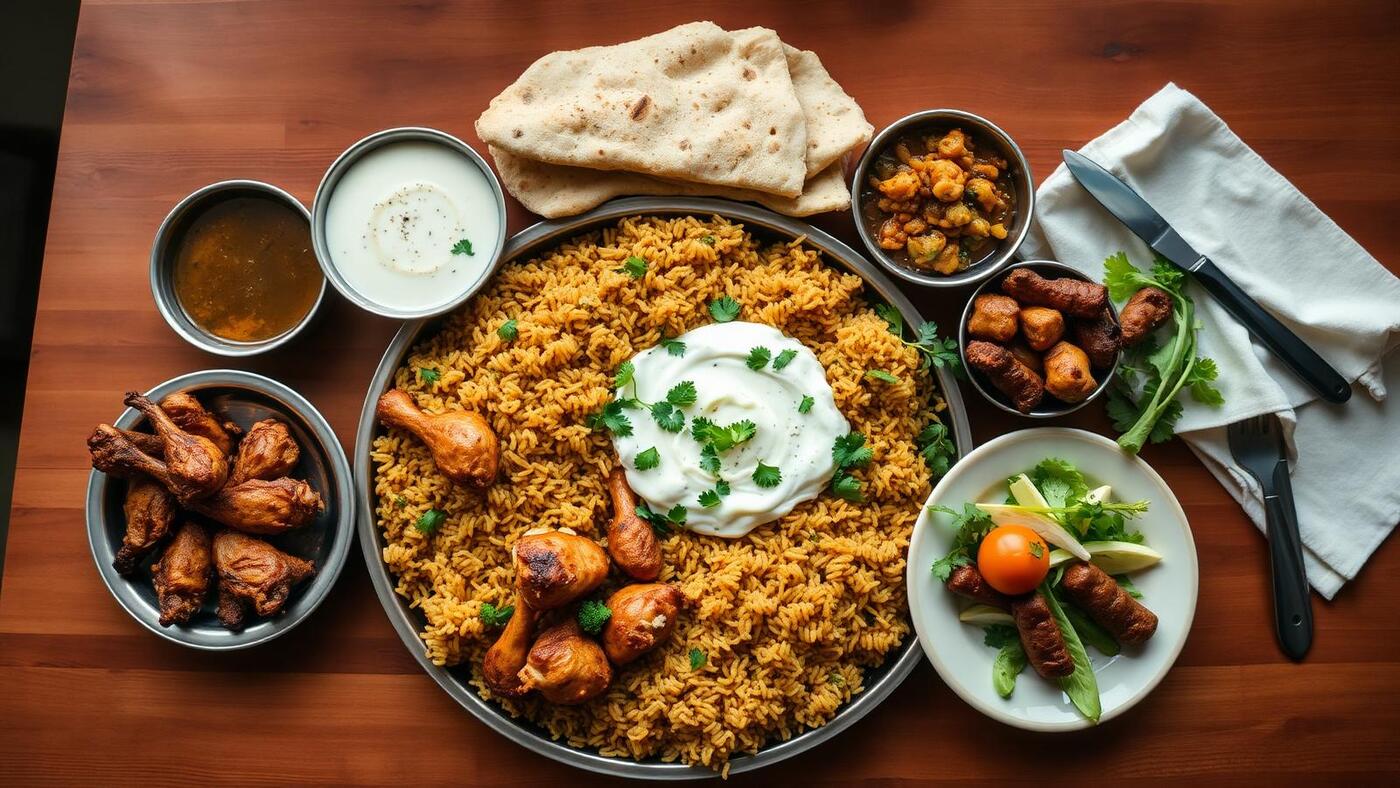
Desi food is the everyday cooking of the Indian subcontinent — Pakistan, India, Bangladesh, Sri Lanka — shaped by Mughal, Persian, Central Asian and regional Punjabi, Sindhi, Pashtun and Balochi traditions. In a Pakistani home, that usually translates to a base of basmati rice or whole-wheat roti, a protein curry (chicken, beef, mutton, lentils or eggs), a vegetable side, fresh yogurt or raita, and salad with onion, cucumber and lemon.
The flavour comes from a tight set of building blocks: onion-tomato-ginger-garlic masala, dry-roasted whole spices (cumin, coriander, cardamom, cinnamon, cloves, black pepper) and finishing herbs like coriander and mint. That base is naturally rich in plant compounds — turmeric's curcumin, capsaicin from chillies, allicin from garlic — and supports gut health when paired with yogurt.
A balanced desi plate
A healthy desi plate looks a lot like the Harvard "Healthy Eating Plate": half the plate vegetables and salad, a quarter lean protein, a quarter whole grains, and a small portion of fruit or yogurt on the side. The desi twist is that dal counts as both protein and fibre, and yogurt counts as protein and probiotics. Pair them well and a single meal can hit 30–40 g of protein with serious micronutrient density.
If you want to plan a real plate down to the gram, our nutrition calculator lets you build a meal from Pakistani ingredients and see calories, protein, carbs, fat and fibre in real time.
Calories: the honest numbers
The biggest reason desi food gets a bad reputation is hidden fat and oversized portions. Restaurant biryani can run 600–900 kcal per generous plate, mostly from oil and ghee. The same dish cooked at home with measured oil and a normal portion sits closer to 450–550 kcal. Karahi served with two rotis lands around 600 kcal. A simple daal-chawal meal with salad? Often 400–500 kcal and one of the most balanced things you can eat.
Some quick benchmarks (per typical 1-person serving, home-cooked):
- Chicken biryani — 450–550 kcal, ~28 g protein
- Chicken karahi + 2 roti — 600–700 kcal, ~45 g protein
- Daal + 1 cup rice — 380–450 kcal, ~16 g protein, 6–10 g fibre
- Aloo paratha + yogurt — 400–500 kcal, ~10 g protein
- Nihari + 1 naan — 700–800 kcal, ~35 g protein
We break the numbers down per dish in dedicated posts — start with chicken biryani nutrition or the daal-chawal balanced plate.
Protein: better than people think
South Asian diets are sometimes painted as carb-heavy, but a typical homemade desi meal hits real protein targets when you eat the protein-rich items intentionally. Chicken breast, beef, mutton, eggs, paneer, dal, chickpeas and yogurt all show up regularly. A reasonable adult target of 1.2–1.6 g of protein per kg body weight (about 80–110 g per day for most adults) is very achievable on a desi diet — read our protein targets for South Asians for a daily template.
Carbs, rice and the GI question
White basmati rice has a lower glycaemic index than most white rices — around 50–58 depending on variety and cooking — and an even lower glycaemic load when eaten with protein, fat and vegetables. That's why daal-chawal or biryani with raita and salad spikes blood sugar far less than rice alone. We explain this in detail in Basmati rice: glycemic index, portions and diabetic-friendly tips.
Roti and chapati made from whole-wheat atta carry 6–10 g of fibre per 100 g and a slower digestive curve than naan or paratha. A medium roti is around 100–120 kcal — switching from naan to roti is one of the simplest ways to drop calories without changing the rest of your plate.
Fats: ghee, oil and the modern debate
Desi cooking uses generous fat — ghee, mustard oil, sunflower oil, sometimes coconut oil. The story isn't "fat is bad." Recent research has softened the case against saturated fat in moderate amounts, and ghee in particular has been part of South Asian diets for thousands of years. The practical guidance: measure your cooking fat (1–2 tablespoons per dish for 4 people, not by eye), choose unrefined oils when you can, and remember a tablespoon of oil is ~120 kcal — small amounts add up. See desi ghee vs refined oil for a calmer, evidence-based comparison.
Spices that earn their keep
A few stars deserve specific mention:
- Turmeric (haldi) — anti-inflammatory curcumin; bioavailability jumps when combined with black pepper and fat
- Cumin (zeera) — supports digestion; rich in iron
- Garlic and ginger — cardiovascular and immune support
- Cardamom and cinnamon — modest blood-sugar moderation
- Fresh coriander and mint — micronutrients with almost no calories
The garam masala health guide goes deeper.
Yogurt, raita and the gut
A bowl of fresh, plain yogurt is one of the most useful foods on a desi table. It's a source of high-quality protein (3.5 g per 100 g), calcium and live cultures that support gut health. Raita — yogurt with cucumber, mint, roasted cumin and a pinch of salt — does the heavy lifting on cooling spicy curries and keeping the meal balanced. More in our yogurt in desi diets guide.
What about sweets?
Mithai is part of the culture and ignoring that helps no one. The honest version: traditional desi sweets are concentrated sugar, ghee and milk solids. A single gulab jamun is around 150 kcal; a piece of barfi 120–180. The right move is portion, not prohibition — one piece after a meal, with chai, on occasion. See desi sweets: sugar, calories, moderation for honest numbers.
How to actually eat desi and stay healthy
Six habits do most of the work:
- Half the plate is vegetables or salad — kachumber, raita, sabzi.
- Use a real serving spoon for rice and one for curry — and stop there.
- Pick the higher-fibre starch when you can — roti over naan, brown basmati over white sometimes.
- Don't drink your calories — a sugary lassi or soft drink can add 250 kcal silently.
- Build at least one daal or chickpea meal into the week — fibre, protein, cheap.
- Eat slowly, mostly at home — restaurant fat and salt are the usual culprits, not "desi food" itself.
If you want to engineer a plate that hits a specific calorie or protein target, the Desi Bites nutrition calculator is the fastest tool for it.
Putting it all together
Pakistani food is not a diet problem — it's one of the most ingredient-rich, protein-friendly, plant-forward cuisines in the world when cooked at home with attention. Eat your daal, eat your sabzi, eat your roti, eat your biryani — measured, balanced, and on your own schedule.