
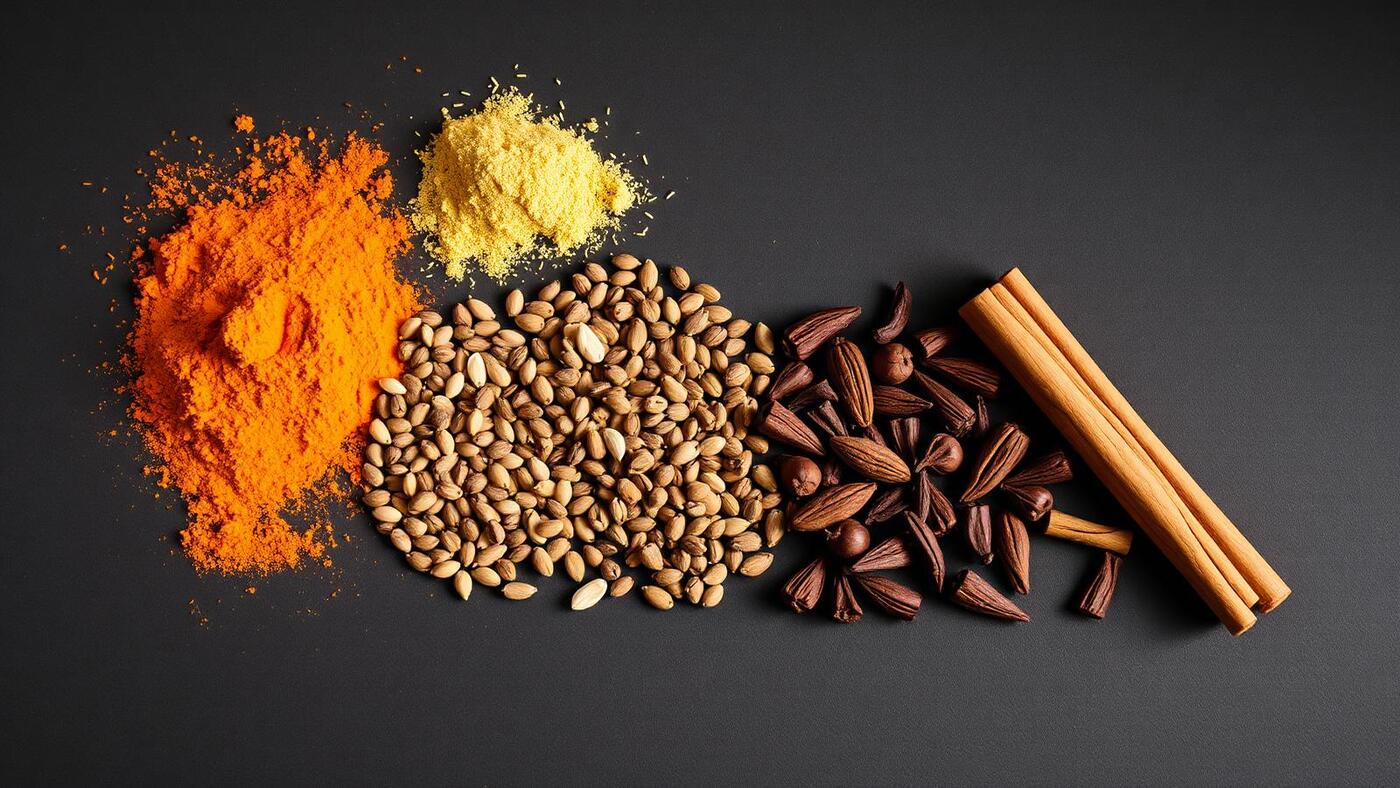
The shortlist that matters
- Turmeric — curcumin, anti-inflammatory; bioavailability low alone, much higher with black pepper and fat
- Black pepper — piperine; aids absorption of curcumin and several other compounds
- Cumin — supports digestion; iron content (~66 mg / 100 g)
- Coriander — antioxidant flavonoids
- Cardamom (green) — modest blood-sugar moderation in trials
- Cinnamon — small but real blood-sugar effect in studies
- Cloves — eugenol, traditional antimicrobial
- Black cardamom — smoky depth, no major bioactive claims
See Harvard's turmeric overview and the NIH curcumin fact sheet for the current state of evidence.
How to actually get the benefit
Most of the studies use concentrated extracts, not the small amount in your dinner. Real-world advice:
- Cook turmeric in oil or ghee with black pepper — standard tadka step already does this
- Use whole spices, not pre-ground when you can — fresher, more aromatic compounds intact
- Toast whole spices briefly before grinding — wakes up the oils
- Add fresh herbs at the end (coriander, mint) — heat destroys some compounds
How much is enough?
Daily cooking with normal amounts of spices is the sweet spot. You don't need turmeric milk every night or supplements. Spices in food are a slow, gentle, cumulative input — that's how traditional cuisines have always worked.
Where they shine in your week
- Karahi — fresh masala-heavy
- Nihari — the broadest spice profile
- Yogurt-based raitas — roasted cumin
Putting it all together
Your masala dabba is one of the most under-appreciated health tools in your kitchen. You don't need to "boost" anything — keep cooking real desi food and the spices do their work in the background.