
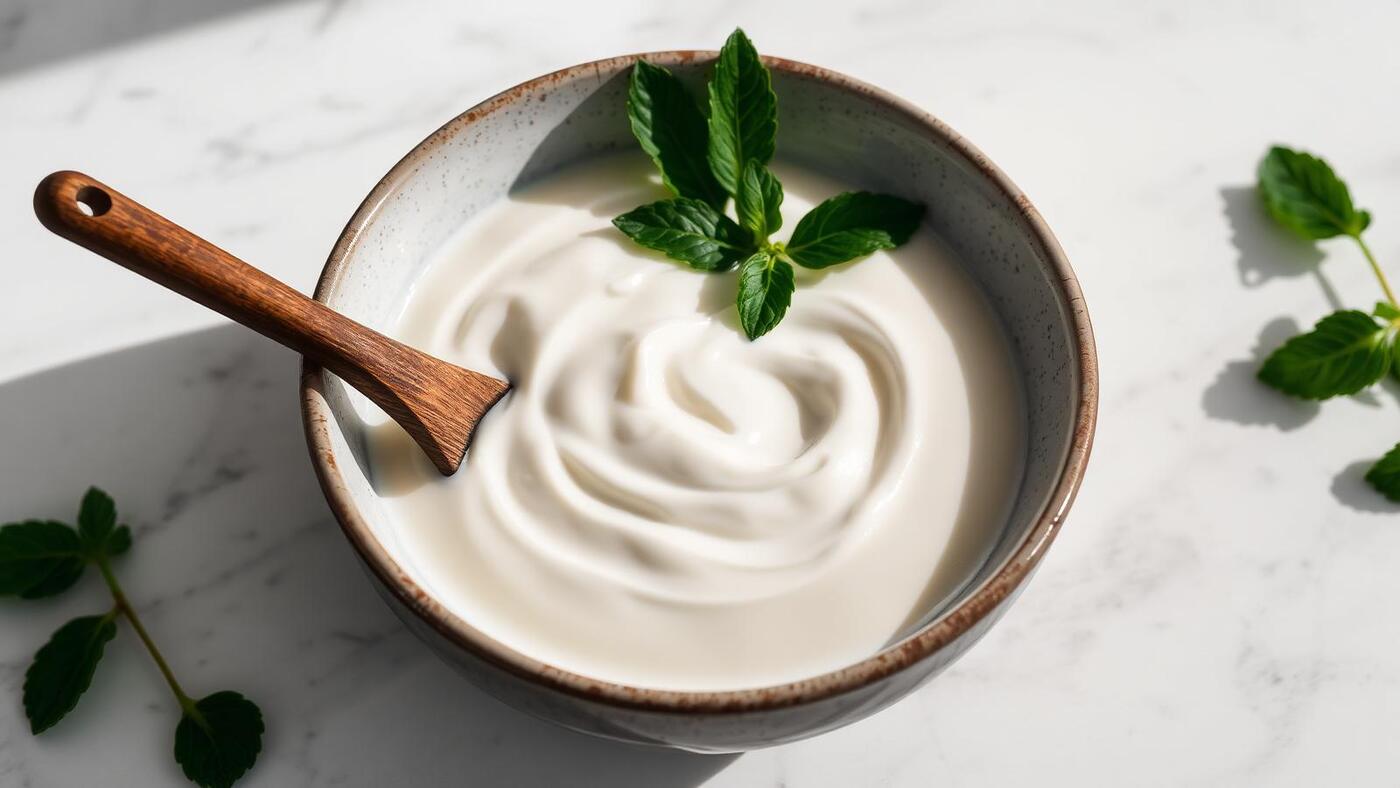
What's in plain yogurt
Per 100 g of plain whole yogurt:
- Calories: 61
- Protein: 3.5 g
- Carbs: 4.7 g (mostly natural lactose)
- Fat: 3.3 g
- Calcium: 120 mg
- Live cultures: Lactobacillus, Streptococcus thermophilus and others
For the calorie cost, the protein and calcium density are excellent — see Harvard's yogurt overview.
Why probiotics matter in desi diets
Pakistani cooking is spice-heavy and sometimes carb-heavy. The live cultures in fresh dahi support gut motility, can ease bloating after spicy meals, and have been linked in studies to better metabolic and immune outcomes.
Practical ways to use it
- Raita with cucumber and mint — cools spicy mains
- Lassi (unsweetened) — breakfast or post-workout drink
- Yogurt marinade for chicken — tenderises, adds flavour
- Bowl of plain dahi with a paratha — balances a carb-heavy breakfast (see aloo paratha)
- Yogurt instead of cream in curries — lower calories, more protein
Sweetened vs plain
Plain yogurt is the healthy version. Flavoured commercial yogurts can carry 15–25 g of added sugar per cup — see WHO guidance on free sugars. Make it at home or buy plain and sweeten yourself with fruit.
Where it fits in diabetic-friendly eating
Plain yogurt has a low glycaemic index and the protein blunts blood-sugar responses to other foods eaten with it. See diabetes-friendly Pakistani meals. Build a meal around it in the nutrition calculator.
Putting it all together
A 200 g bowl of plain dahi a day is one of the cheapest, most evidence-supported food habits in any cuisine. Pakistani kitchens have been doing it for centuries — keep it that way.