
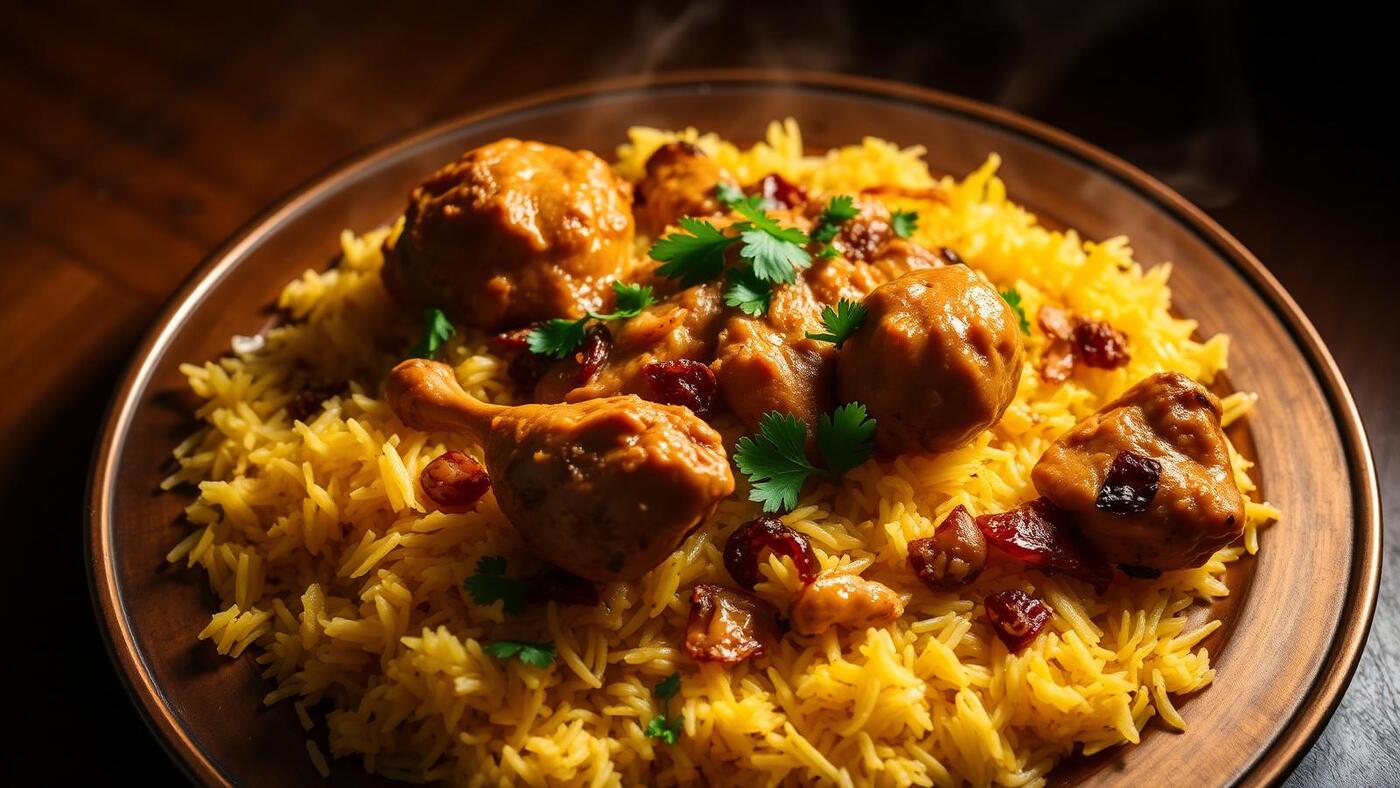
What's actually in a plate of biryani
Chicken biryani is a one-pot rice dish layered with marinated chicken, fried onions (birista), yogurt, whole and ground spices, herbs and saffron-milk on top. The chicken is usually marinated in yogurt, garlic, ginger and chilli, then cooked in oil or ghee with onion-tomato masala. Par-cooked basmati rice is layered over the meat and "dum" — slow-steamed — until the flavours meld.
The healthy parts: high-protein chicken, low-GI basmati, fermented yogurt, fibrous onions, and a serious spice profile (turmeric, cumin, cardamom, cloves, cinnamon, bay leaf, black pepper). The unhealthy variable: how much oil or ghee gets used during the bhuna step and the birista frying.
The honest calorie numbers
Per 350 g serving (one normal restaurant-style plate of biryani — not a wedding plate):
| Style | Calories | Protein | Carbs | Fat |
|---|---|---|---|---|
| Home-cooked, measured oil | 450–500 kcal | 26–30 g | 55–62 g | 12–16 g |
| Restaurant chicken biryani | 600–750 kcal | 28–34 g | 70–85 g | 22–32 g |
| Wedding / "special" biryani (heavy ghee) | 800–950 kcal | 32–38 g | 80–95 g | 35–50 g |
The biggest single variable is fat from the oil pool — restaurant biryani is often cooked with 1–2 cups of oil for a 1 kg batch, vs. ½ cup at home.
We worked these numbers from USDA values for cooked basmati rice and cooked chicken breast, plus measured oil and yogurt. You can plug in your own portion and ingredient amounts in the nutrition calculator for an exact number.
Protein, carbs and fat in context
A 350 g plate of home-cooked chicken biryani gives roughly:
- 28 g protein — almost half of a typical daily target in one meal
- 60 g carbs — about a quarter of a 2,000 kcal day
- 14 g fat — moderate, mostly from chicken thigh and cooking oil
- 2–3 g fibre — low; this is where the salad and raita come in
Pair the plate with 150 g raita and a kachumber salad and you add 5–6 g of fibre, ~4 g of protein, and almost no calories. That single habit turns biryani from a "rice bomb" into a fairly balanced meal.
Three small tweaks that cut 150+ kcal
You don't need to ruin biryani to make it lighter. These three tweaks together can shave 150–200 kcal off a plate:
- Measure cooking oil — 3 tablespoons (not "splash") per 4-person batch. Saves ~70 kcal per serving.
- Bake the onions — birista in an air fryer or oven instead of deep-fried. Saves ~60 kcal per serving and tastes nearly identical.
- Use chicken breast instead of thigh — drops ~80 kcal per serving and bumps protein.
If you want to go further, swap half the white basmati for brown basmati. It adds fibre and lowers the GI, though the colour and texture change slightly.
Is biryani good or bad for weight loss?
Neither — it depends on the rest of the day and the portion. A single 400 kcal plate of biryani inside a 1,800 kcal day with normal protein is not a problem. The mistake is the "small extra spoon" of rice (adds ~100 kcal), the sugary drink alongside (250+ kcal), and the second serving "because it's so good" (another 400 kcal). Plate it once, sit down, enjoy it, and the math stays sane.
For a complete framework, see our weight loss on a desi diet guide.
Is biryani okay for diabetics?
Basmati rice has a glycaemic index of ~50–58, which is on the lower end for white rice. When it's eaten as biryani (cooked with protein, fat and yogurt) the meal's glycaemic load is significantly lower than rice alone. A moderate portion (200–250 g) with extra salad and raita, eaten slowly, is reasonable for most people with type 2 diabetes — but always pair this with your own glucose monitoring. The detailed nuance is in our diabetes-friendly Pakistani meal swaps post.
Make it yourself
The Desi Bites kitchen version of biryani is built around measured oil, lots of birista flavour without a deep fry, and full-fat yogurt for tenderness. The full recipe with weights and step-by-step nutrition is in our chicken biryani recipe.
Putting it all together
Chicken biryani is rich, protein-dense and — at sensible portions — completely compatible with a healthy diet. Watch the oil, watch the portion, eat the raita and salad with it, and it earns its place at any table.