
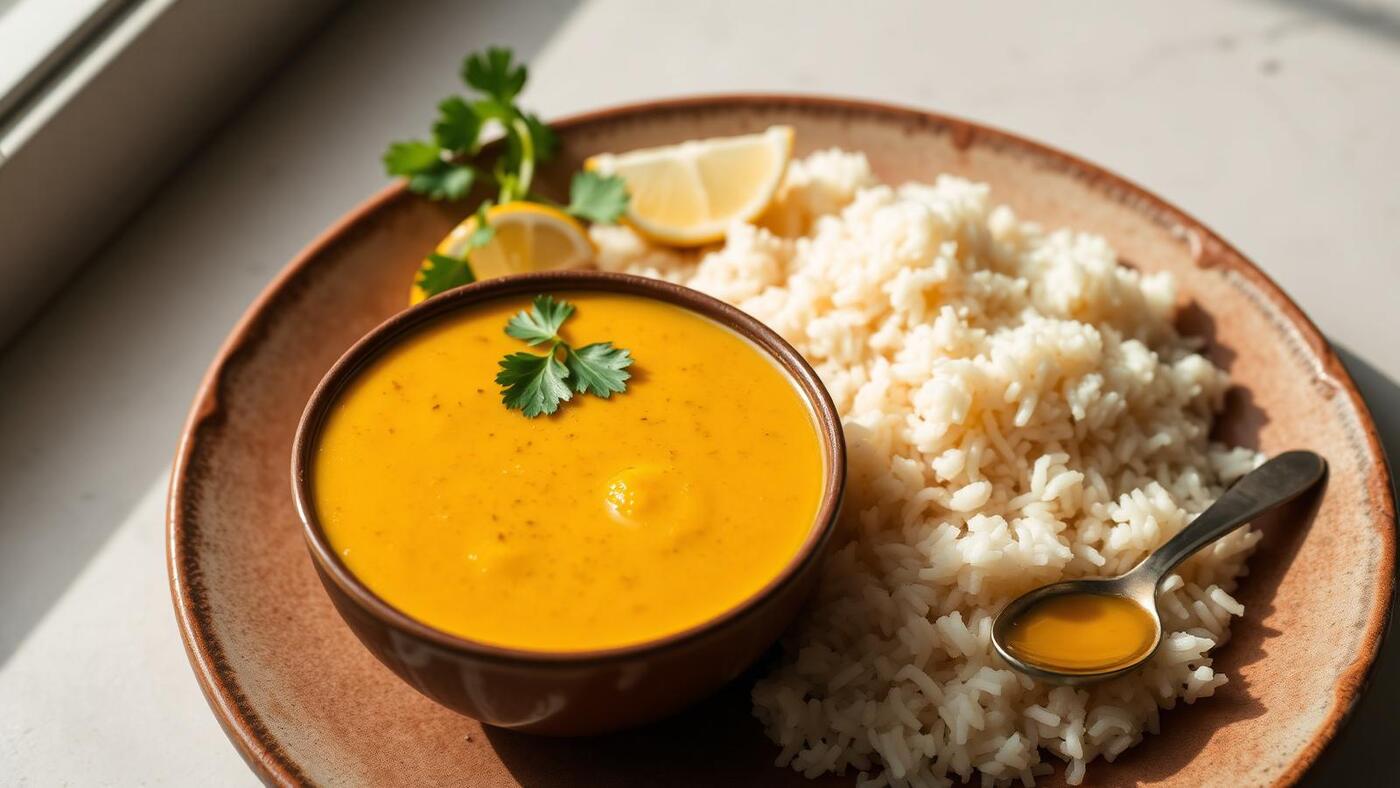
The accidental nutrition genius
A bowl of daal next to a small heap of rice doesn't look like a "smart" meal. It looks like what's left in the kitchen on a Tuesday. But the combination is something nutritionists across cultures have been independently reinventing for decades — a grain plus a pulse, in roughly equal volumes, with a fat-and-spice tadka on top. Together, rice and dal cover the essential amino acids more completely than either does alone, deliver real fibre, and stay light on the fat budget.
The numbers
A typical homemade serving — about ¾ cup of cooked basmati rice (~150 g) and 1 cup of cooked yellow daal (~240 g) — gives:
| Nutrient | Amount | % of typical daily target |
|---|---|---|
| Calories | 380–450 kcal | 19–22 % |
| Protein | 14–18 g | 25–35 % |
| Carbs | 65–75 g | 22–28 % |
| Fat | 8–12 g | 12–18 % |
| Fibre | 6–10 g | 24–40 % |
| Iron | 3–5 mg | 15–25 % |
That's a complete meal at around 400 kcal — half of what a takeaway burger might cost you.
You can model your own daal-to-rice ratio (and tadka oil) in the nutrition calculator.
Why "grain + pulse" works
Rice is low in the amino acid lysine. Lentils are low in methionine. Eat them together and you cover both — the result is a protein profile that's nearly as complete as animal protein, at a tiny fraction of the cost and with serious fibre on top. This isn't a desi-only insight: rice and beans (Latin America), hummus and pita (Levant), miso and rice (Japan), peanut sauce and rice (West Africa) all do the same trick.
Lentils on their own are also one of the most nutrient-dense foods you can buy — see our deep dive in lentils 101: protein, iron and cooking.
The tadka tax
The variable that moves daal chawal from "great" to "calorie-bomb" is the tadka — the finishing fat. A tablespoon of ghee bubbling with cumin and red chilli adds about 100 kcal and 11 g of fat to the pot. For a 4-person daal that's 25 kcal per serving — negligible. If the tadka becomes 3 tablespoons of ghee per pot, it climbs to ~75 kcal per serving, still fine. The "problem" tadka is the restaurant version: half a cup of oil to make it photograph well. Avoid that pattern at home.
How to upgrade daal chawal without losing the comfort
Three small upgrades, in order of impact:
- Use mixed dals. A combination of moong, masoor and chana increases the protein, fibre and micronutrient spread. Total cook time barely changes.
- Add a vegetable to the pot. Spinach (palak daal), bottle gourd (lauki daal) or tomato all dissolve into the daal and add bulk for almost no calories.
- Swap a third of the rice for brown basmati or millet (bajra). Bumps fibre, drops GI, keeps the texture close enough to the original.
For more weeknight ideas built around dal, see diabetes-friendly Pakistani meal swaps.
Is daal chawal good for weight loss?
Yes — arguably one of the best tools you have. The combination is high in fibre and protein (both increase fullness), naturally low in saturated fat, and cheap enough to eat regularly. A plate of daal chawal with a kachumber salad and a small bowl of raita can sit comfortably under 500 kcal and keep you full for hours.
The full weight-loss framework is in weight loss on a desi diet — without giving up roti.
Is daal chawal good for diabetics?
Generally yes — daal slows down the glycaemic response of rice significantly because of its protein and soluble fibre. A reasonable portion of rice (½–¾ cup cooked) with a full serving of daal and salad keeps the glycaemic load moderate. Brown basmati or millet roti further help. We cover this in detail in basmati rice glycemic index.
Make it tonight
The Desi Bites version uses a mix of moong and masoor dal, a single tablespoon of ghee for the tadka, and a finishing squeeze of lemon. Full ingredients and method in our daal chawal recipe.
Putting it all together
Daal chawal is proof that "balanced" doesn't need to be fancy or expensive. Grain + pulse + a hot tadka + a salad on the side. The most ordinary plate on a Pakistani table is also one of the smartest.