
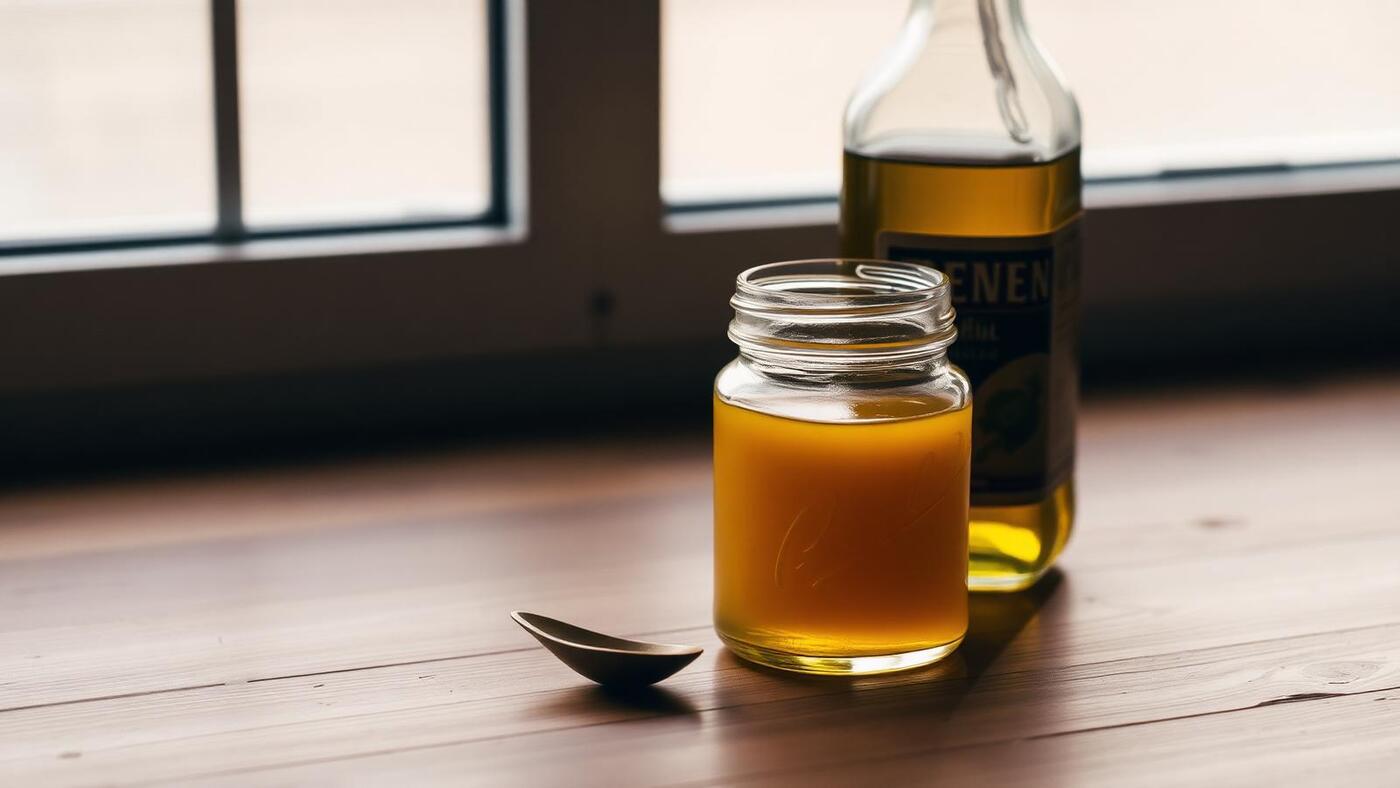
The numbers are nearly identical
- Ghee: ~900 kcal per 100 g, 100 % fat (mostly saturated)
- Sunflower oil: ~884 kcal per 100 g, 100 % fat (mostly unsaturated)
- Mustard oil: ~884 kcal per 100 g, 100 % fat (mix of mono and poly)
The calorie difference is rounding error. The real differences are smoke point, fatty-acid profile, and flavour.
Where ghee wins
- High smoke point (~250 °C) — safe for tadka, frying, sautéing
- No milk solids to burn (they were removed during clarification)
- Carries fat-soluble nutrients (vitamin A, E, K) and butyrate
- Flavour — the entire reason it exists
Where oil wins
- Cheaper per litre
- Lower in saturated fat — better suited for very frequent cooking
- Neutral flavour when you don't want a buttery taste
How much fat per dish?
Aim for 1–2 tablespoons total per 4-person dish for everyday cooking. That's 30–60 kcal per portion from cooking fat — barely moves the meal's total. The trouble starts at half-cup territory, which is restaurant kitchen norm.
Practical strategy
- Use ghee where flavour is the point — tadka, parathas, finishing dal
- Use a neutral oil for daily curries, karahi, frying
- Measure with a spoon, not by eye — single biggest lever for cutting hidden calories
- Avoid hydrogenated/partially hydrogenated fats (banaspati) — that's the actual concern, not ghee or modern refined oils
See Harvard's overview of fats and cholesterol for the current state of the science.
Where this shows up in your week
- Nihari — modest finishing ghee, not a ladle
- Biryani — bake or shallow-fry the birista
- Karahi — 3 tablespoons of oil per kg of chicken, not a cup
Use the nutrition calculator to see how a tablespoon swap actually changes the numbers.
Putting it all together
Ghee isn't poison and oil isn't health food. Both are fats, both are calorie-dense, and the amount matters far more than the type. Measure with a spoon and use whichever the dish actually needs.