A dish with a story
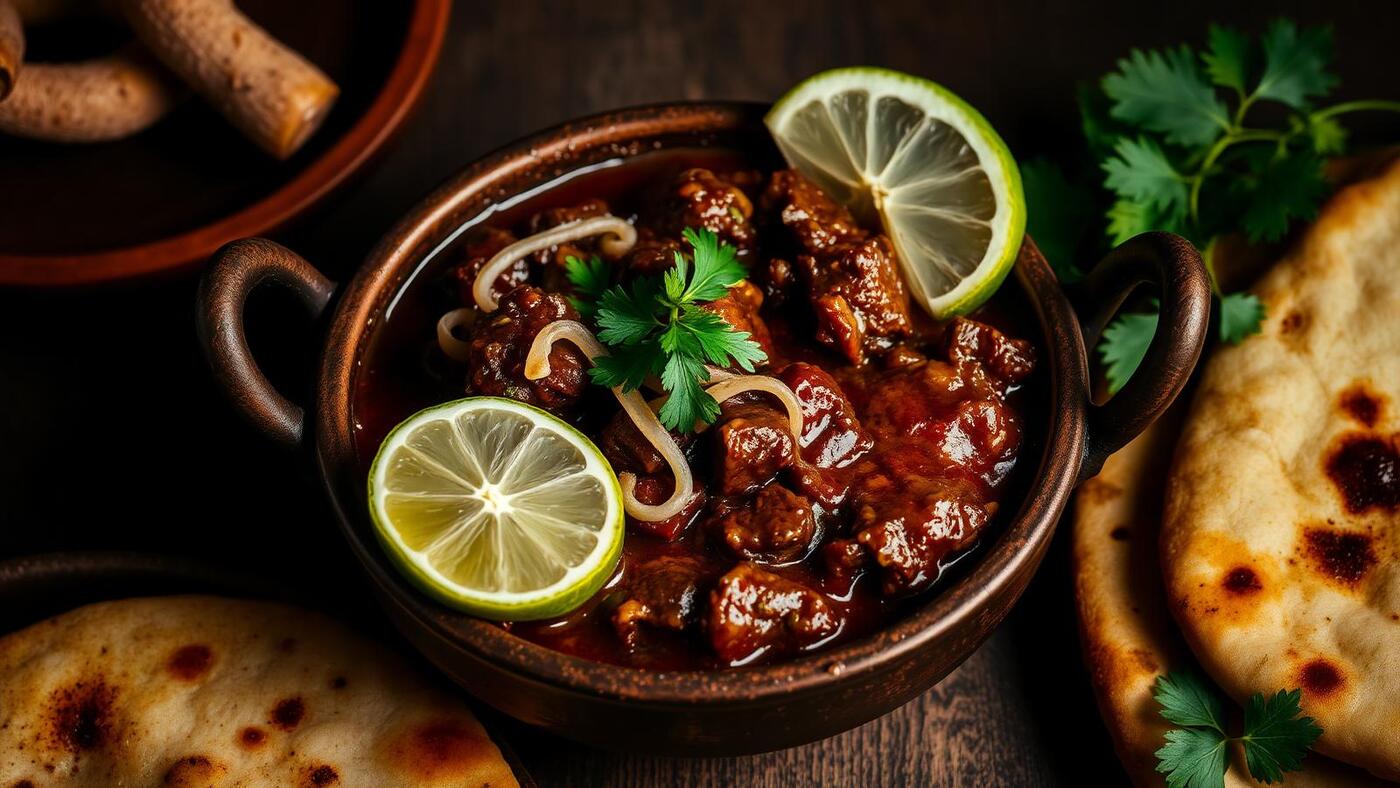
Nihari (from the Arabic nahar, meaning morning) was traditionally eaten by labourers and Mughal court guards as a heavy pre-dawn meal that could carry them through hours of physical work. The name still hints at breakfast, but in modern Pakistan nihari is more often a weekend lunch or Friday treat. It's slow-cooked beef shank or shin in a deeply spiced gravy thickened with whole wheat flour, traditionally cooked overnight in a sealed handi.
What goes into it
The base ingredients of a proper nihari are surprisingly short:
- Beef shin or shank with marrow bones — the gelatine from slow cooking is what makes the gravy silky
- Whole wheat atta — the thickener
- Onion fried in oil or ghee — for body
- Nihari masala — a long blend of fennel, dried ginger, nutmeg, mace, black cardamom, bay leaf, cumin, coriander, cloves, cinnamon, peppercorns and the rest
- Garnish — sliced ginger, green chilli, coriander, lemon
The cooking method (3–6 hours of low heat) breaks down the connective tissue, extracts collagen, and produces a stew whose richness comes from the meat itself, not extra fat.
Calories and macros — per bowl
For a typical 300 g serving of homemade beef nihari (gravy + meat, no naan):
| Component | Approx |
|---|---|
| Calories | 450–520 kcal |
| Protein | 32–38 g |
| Carbs | 12–18 g |
| Fat | 28–34 g |
| Iron | 4–6 mg |
| Zinc | 4–6 mg |
Add one naan (~300 kcal) and the meal is roughly 750–820 kcal. With two naans it crosses 1000 kcal — which is why nihari is best treated as a feature meal, not a daily dinner.
Plug your own portions into the nutrition calculator to see exact numbers.
The good news: serious micronutrients
Slow-cooked beef shank is one of the best sources of heme iron you can eat — the form of iron the body absorbs most easily. A single bowl can cover 25–35 % of an adult's daily iron need and is a reasonable strategy for people prone to iron-deficiency anaemia, especially women of reproductive age. The NIH iron fact sheet covers the absorption story in detail.
Nihari is also rich in zinc, vitamin B12, selenium and collagen peptides — the joint-friendly proteins released from connective tissue during slow cooking.
The trade-off: fat and sodium
The dish's main nutritional weak point is saturated fat from the meat plus the oil pool on top, and sodium from generous salting. The traditional "tarka" of ghee that gets stirred in at the table is delicious and not strictly necessary — you can finish nihari with just a squeeze of lemon, fresh ginger and chilli for the brightness, and skip the extra ghee on most days. Saves ~80 kcal per bowl.
For a calmer take on cooking fats, see desi ghee vs refined oil.
Spices that earn their keep
The nihari masala does more than flavour. Fennel has a long traditional use for digestion. Dried ginger (sonth) is warming and a mild anti-inflammatory. Black cardamom and mace add complex flavour for almost no calories. There's a reason this dish was historically considered restorative — it's basically a slow-cooked meat broth with a herbalist's spice pantry on top. More in garam masala health benefits.
How to fit nihari into a normal week
Nihari is heavy by design. The right move isn't to "fix" it — it's to plan around it.
- Eat it as the main meal of the day, not on top of a normal lunch.
- One naan, not two. Or eat the meat + gravy with extra salad and skip the bread.
- Keep the day's other meals light — breakfast yogurt + fruit, dinner salad and dal.
- Walk after eating. Twenty minutes of light walking after a heavy meat meal noticeably moderates blood sugar and digestion.
Make it yourself
The Desi Bites kitchen nihari uses beef shank, a homemade masala blend, measured ghee, and finishes with the classic ginger-lemon-coriander combination at the table. Full ingredients and step-by-step in our beef nihari recipe.
Putting it all together
Nihari is one of the great Pakistani dishes — protein-dense, mineral-rich, deeply flavoured, and worth the time it takes to cook. Eat it occasionally, eat the meat and the gravy more than the naan, and treat it like the feature meal it was always meant to be.