
What goes into karahi
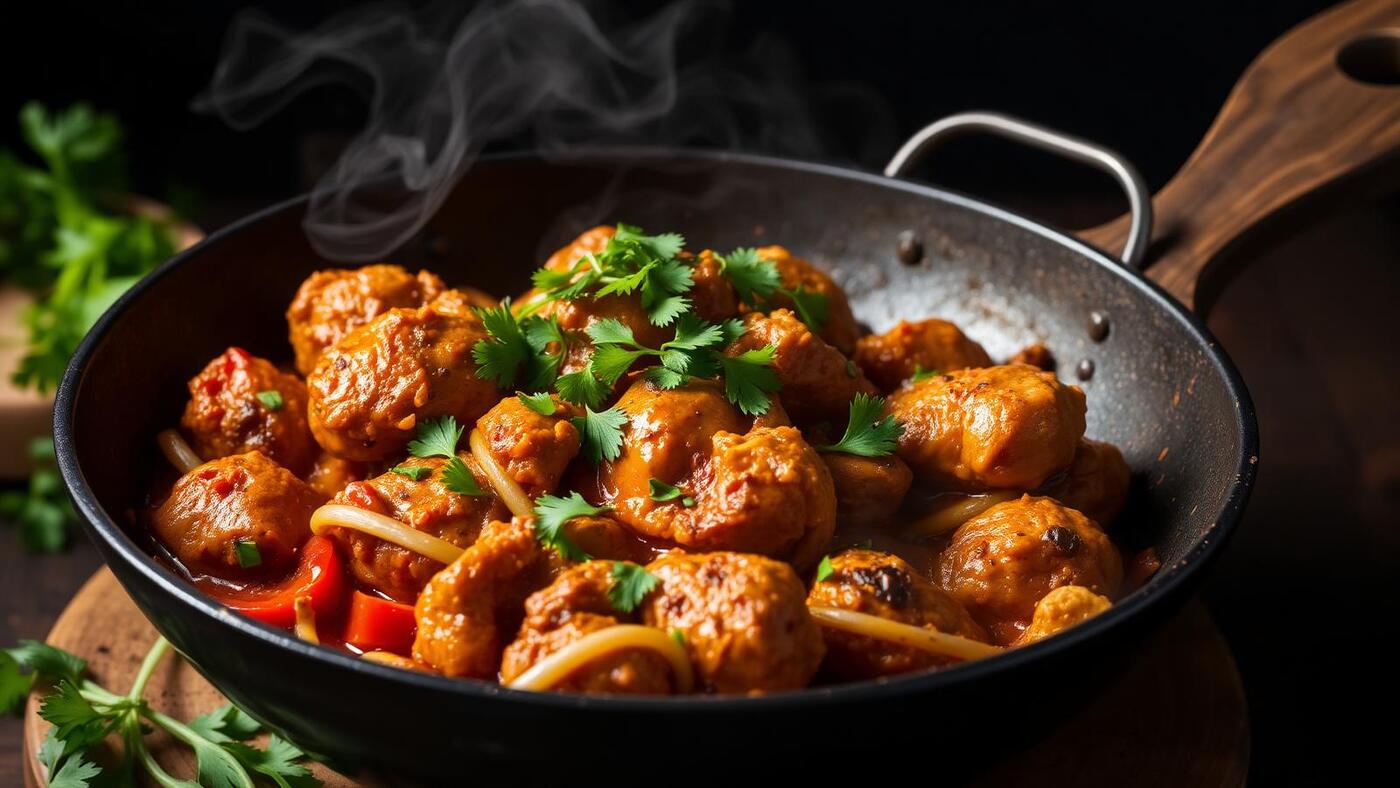
Chicken karahi (also called kadai chicken) is a fast, hot-wok dish — bone-in chicken cooked with tomato, ginger, garlic, green chilli, crushed coriander seeds, black pepper and finishing fresh coriander. There's no onion in classical Lahori karahi and no yogurt. The technique is high heat, short cook, lots of stirring — the wok finish gives it that signature reduced-tomato-and-fat glaze.
That short ingredient list is actually a big nutritional win: you can count the calories on one hand. The variables are the cut of chicken (breast vs thigh), the oil amount, and how much ghee gets stirred in at the end.
Calories and macros — per serving
For a typical 250 g serving (about a quarter of a 1 kg-chicken batch), homemade:
| Cut + style | Calories | Protein | Carbs | Fat |
|---|---|---|---|---|
| Chicken breast karahi | 380–430 kcal | 38–42 g | 6–8 g | 20–24 g |
| Chicken thigh karahi | 460–520 kcal | 34–38 g | 6–8 g | 30–36 g |
| Restaurant karahi (extra oil) | 550–650 kcal | 34–38 g | 8–10 g | 38–48 g |
Add 2 medium rotis (~200 kcal) and you're at a complete 600–700 kcal meal with serious protein.
You can model your specific recipe in the nutrition calculator — change cut, oil, weight, see the numbers shift.
The protein story
A 250 g portion of chicken-breast karahi gives ~40 g of protein for around 400 kcal. That's a protein-to-calorie ratio of roughly 1 g per 10 kcal — better than almost any other desi main. For context, the same calories of biryani give about 14 g protein, and aloo paratha gives about 8 g.
If you train, are over 50, or are losing weight while trying to preserve muscle, karahi (or its cousins — kadai, bhuna, handi) is one of the most useful tools on the menu. See our protein targets for South Asians for daily targets.
Carbs and fibre
Karahi itself is essentially zero-carb apart from a few grams from tomato and onion. That makes it ideal for low-carb meals — pair it with extra salad and yogurt, skip the roti, and a generous portion sits under 500 kcal with 40+ g protein.
If you do eat roti, the fibre from whole-wheat atta (~6 g per medium roti) does most of the fibre work for the meal. A side of fresh kachumber salad adds another 2–3 g.
Fat: the part to watch
Restaurant karahi gets its glossy, restaurant-tasting finish by using a lot of oil — sometimes a full cup for a kilo of chicken. Most of that oil ends up at the bottom of the wok and on your plate. The fix at home is simple:
- Start with 3 tablespoons of oil for a 1 kg karahi — enough to bloom the spices and brown the chicken.
- Use chicken breast if you want to drop fat further; thighs taste richer but add 8–10 g fat per serving.
- Skip the finishing ghee swirl unless it's a celebration.
For the broader case on fats in desi cooking, see desi ghee vs refined oil.
Why the spices matter
Karahi leans heavily on crushed coriander seeds, cumin, black pepper and green chilli — and the masala in it is unusually fresh because the dish cooks so fast. Black pepper increases the bioavailability of turmeric's curcumin (if your spice mix includes any), and capsaicin from chilli has been linked in studies to modest metabolic and cardiovascular benefits. More in garam masala health benefits.
How to fit karahi into your week
Karahi is one of the most flexible desi mains for a weeknight:
- High-protein cut day: breast karahi + salad + 1 roti (~500 kcal, 45 g protein)
- Balanced family dinner: thigh karahi + 2 roti + raita (~700 kcal, 40 g protein)
- Low-carb dinner: breast karahi + kachumber + extra yogurt (~450 kcal, 50 g protein, 12 g carbs)
For a full recipe with measured oil, weights and a per-portion macro card, see our chicken karahi recipe.
Putting it all together
Karahi is one of the best things to cook when you want maximum flavour and maximum protein with minimum complication. Watch the oil at the start, finish with fresh coriander, and serve with one less roti than instinct suggests.