
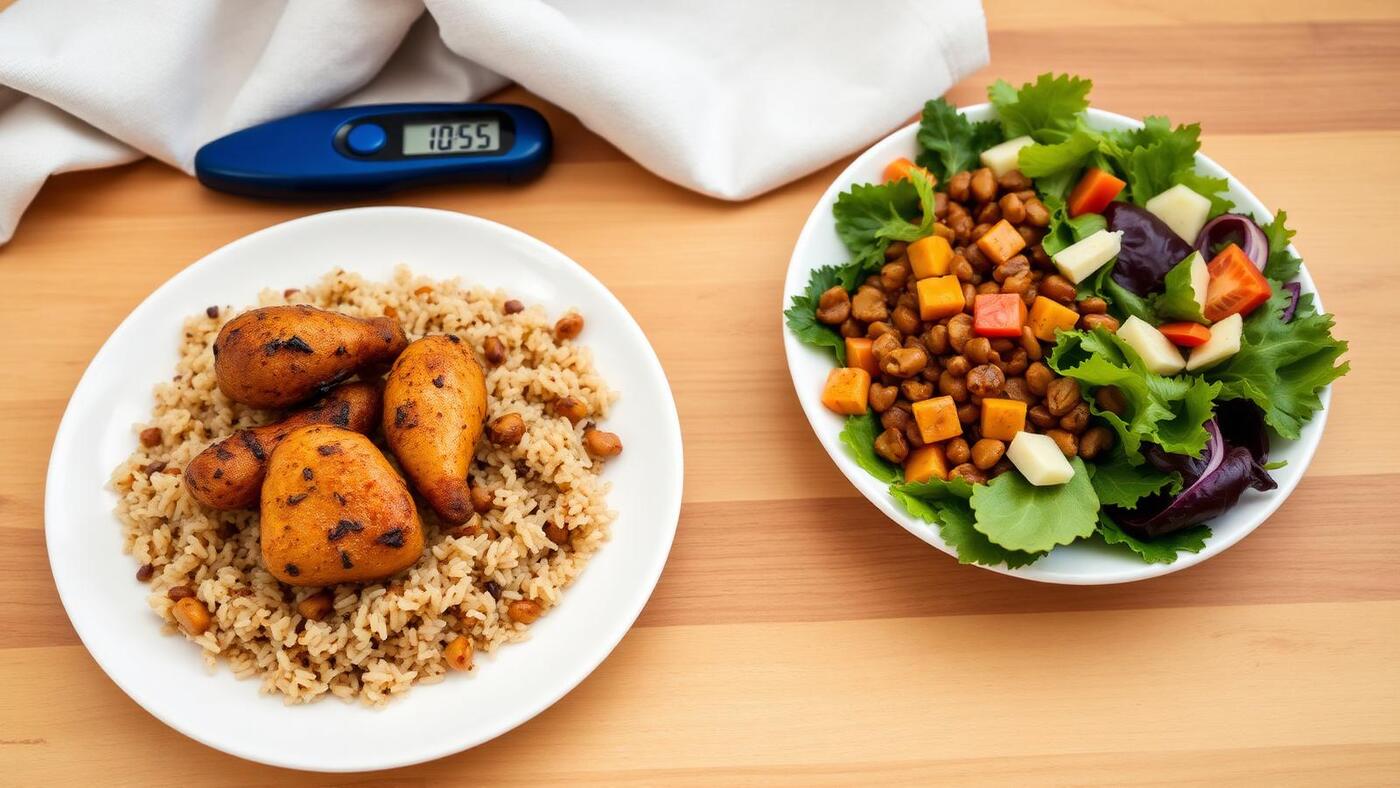
The principles (not a rulebook)
For most people with type 2 diabetes:
- Aim for 45–60 g of carbohydrate per meal
- Pair every carb with protein, fibre and a little fat
- Choose lower-GI grains when possible — basmati over jasmine, oats over cornflakes
- Walk 10–20 minutes after meals — directly improves post-meal glucose
- Keep meal timing consistent
See the American Diabetes Association nutrition guidance and Harvard on carbohydrates and blood sugar.
Specific desi swaps
| Standard | Swap | Why |
|---|---|---|
| 1 cup white rice | ½ cup basmati + extra sabzi | Lower load, same satisfaction |
| 2 naans | 2 whole-wheat rotis | More fibre, lower GI |
| Aloo paratha alone | 1 paratha + 200 g yogurt + salad | Protein and fibre blunt the spike |
| Sugary lassi | Plain lassi without sugar | -25 g sugar |
| Gulab jamun | 1 piece after a balanced meal, walk after | Eat sweet smartly (see gulab jamun moderation) |
| Plain biryani | Smaller portion + extra raita + salad | Lower glycaemic load |
| Aloo curry only | Mixed sabzi (cauliflower, peas, paneer) | Lower carbs, more nutrients |
What to add more of
- Lentils — high fibre and protein; see lentils 101
- Chickpeas — chana chaat is a great snack
- Leafy greens — palak, sarson, methi
- Yogurt — see yogurt benefits
- Eggs — protein-dense, near-zero glycaemic impact
- Nuts — small handful as snack
What to reduce, not eliminate
- White rice — half the portion most days, full portion sometimes
- Sweets — one piece occasionally with food, not as a daily habit
- Fried snacks — Saturday treat, not weeknight default
- Naan and paratha — keep for weekends; weekday default is roti
A diabetic-friendly day
- Breakfast: 2-egg omelette + 1 roti + tea (no sugar) — 320 kcal, ~22 g carbs
- Lunch: chicken karahi + 1 roti + kachumber — 540 kcal, ~35 g carbs
- Snack: chana chaat (½ cup) + green tea — 130 kcal, ~18 g carbs
- Dinner: daal (1 cup) + ½ cup rice + raita + sabzi — 440 kcal, ~52 g carbs
Total ~1430 kcal, ~127 g carbs, well-distributed.
What to discuss with your doctor
This is general guidance, not medical advice. Targets vary by person, medication and HbA1c. Always coordinate dietary changes — especially carb targets — with your treating clinician. Glucose monitoring (a CGM if available) gives the fastest feedback.
Tools
Build any meal in the nutrition calculator and watch the carb column — easiest way to learn what 45 g of carbs actually looks like on your plate.
Putting it all together
A diabetic-friendly desi diet isn't a different cuisine — it's the same one with smaller starch portions, more dal and vegetables, less sugar, and a walk after dinner. Build those into the week and most of the work is done.