
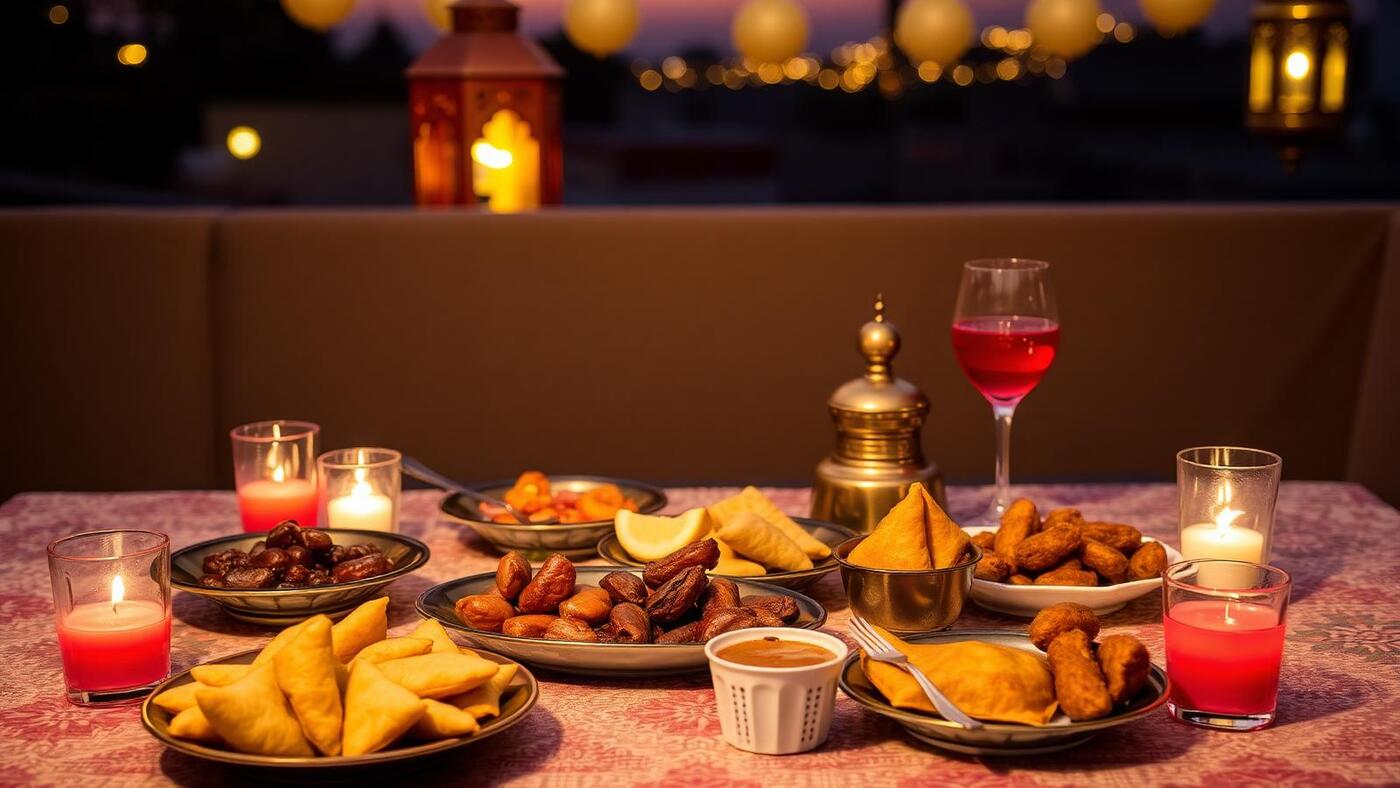
The two-meal framework
Ramadan condenses your eating into a roughly 10-hour window. The structure that works best for most people:
- Sehri (pre-dawn): slow-release carbs + protein + fat + plenty of water
- Iftar (breaking the fast): dates + water first, then a balanced real meal
- Pre-tarawih: light fluids, fruit if needed
- Late evening: small protein-and-yogurt snack if hungry
Sehri that actually lasts
Aim for ~500–600 kcal with real protein and fibre:
- 1 paratha or 2 slices whole-grain toast
- 2 eggs (omelette or boiled)
- 200 g yogurt or a glass of milk
- 1 fruit (banana, apple, dates)
- 2 glasses of water
Avoid: heavy fried foods, sugary lassi, pure white-flour parathas with no protein — they spike and crash, leaving you hungry by 11 am.
Iftar that doesn't crash you
Break the fast with 3 dates + a glass of water, pray, then sit down to a proper meal:
- Salad first (kachumber, raita) — gentle restart for the gut
- Protein-rich main (chicken karahi, haleem, beef curry)
- Modest carbs (1 roti or ¾ cup rice)
- Fruit chaat or chana chaat for fibre
What to avoid: a huge plate of fried samosas + pakoras + rooh afza + biryani — that combination is ~1500 kcal of mostly fried carbs and sugar, and is the single most common reason for Ramadan weight gain and energy crashes.
Hydration strategy
- 2 glasses of water at sehri
- 1 glass with breaking the fast
- 1 glass between iftar and tarawih
- 1 glass before bed
- 1–2 glasses at sehri again
That's roughly 2–2.5 litres spread across the eating window. The Harvard healthy drinks guide is a useful framing.
What to skip
- Sugary drinks (rooh afza, packaged juice) — easy 250+ kcal of pure sugar
- Deep-fried iftar mountains every day
- Skipping sehri — leads to overeating at iftar
- Late-night biryani and sweets — disrupts sleep, worsens next day's fast
Plan tonight
Use the nutrition calculator to plan a sample sehri and iftar — many people are surprised how much room they have for protein and produce when they cut the sugary drinks.
Putting it all together
A good Ramadan isn't about eating less, it's about eating better in the window you have. Build both meals around protein, fibre and water, treat fried snacks as a side not a main, and the month feels lighter — not heavier.